

Kexcelled Materials — Filaments & Resins
Practical, reliable materials for day-to-day production and prototyping. Below is a quick, technical overview to help you choose the right Kexcelled filament or resin for your workflow.
FDM Filaments
Consumer Filaments
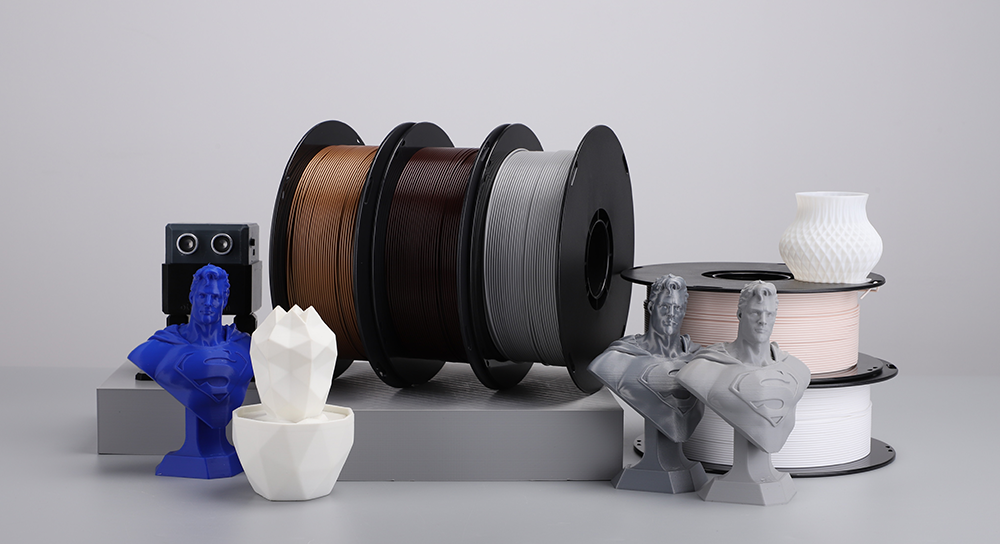
Kexcelled Consumer filaments are designed for everyday printing—easy to use, dimensionally stable, and ideal for rapid prototyping or general-purpose parts. These materials prioritise print reliability and visual quality, making them perfect for hobbyists, schools, and commercial workflows needing consistent output.
- K5 PLA: Professional-grade PLA offering accuracy and smooth finish for models, jigs, and prototypes.
- K5M PLA Matte: Low-gloss PLA for uniform surfaces on display pieces and housings.
- K6 PLA FG: Food-safe PLA suitable for utensils, moulds, and container prototypes.
Aesthetic Filaments
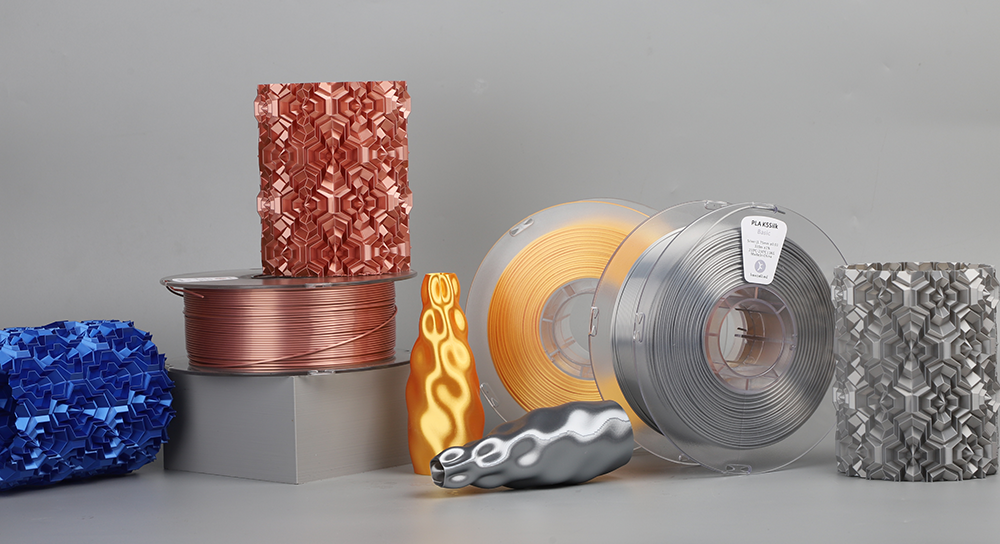
Designed for visual impact, Aesthetic filaments focus on surface finish and presentation. These materials excel in display models, artwork, signage, trophies, and cosplay components, offering enhanced colour depth and light reflection.
- K5 PLA Silk: High-gloss, reflective PLA ideal for decorative parts and presentation models.
- K5 PLA Matte (alt aesthetic option): Smooth, low-sheen surfaces great for photography and product mock-ups.
Flexible Filaments
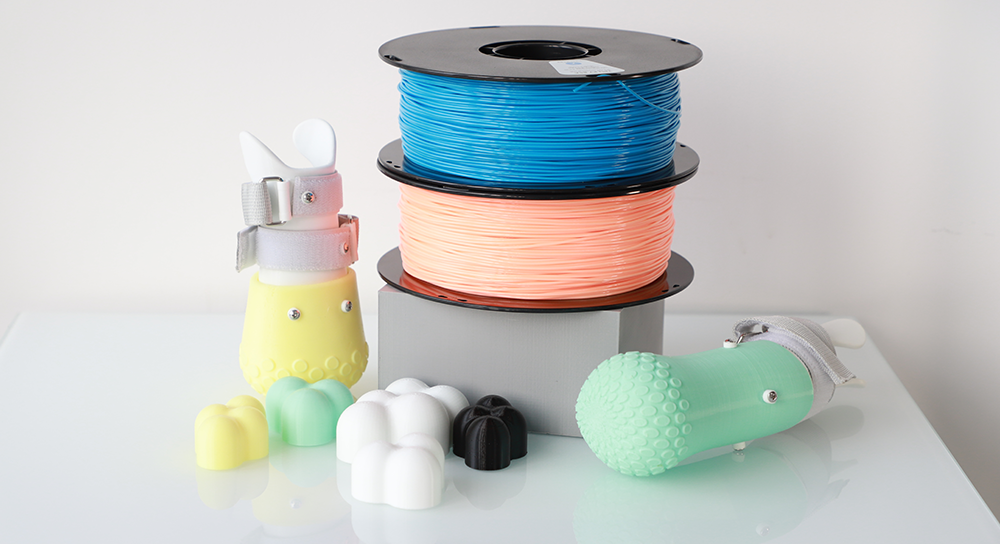
Flexible materials provide impact absorption, bending endurance, and vibration damping. Ideal for wearables, seals, medical braces, protective cases, and functional hinges that must repeatedly flex without cracking.
- K8 / K9 TPU: Durable and elastic TPU with excellent layer bonding and reliable printability for flexible applications.
Functional Filaments
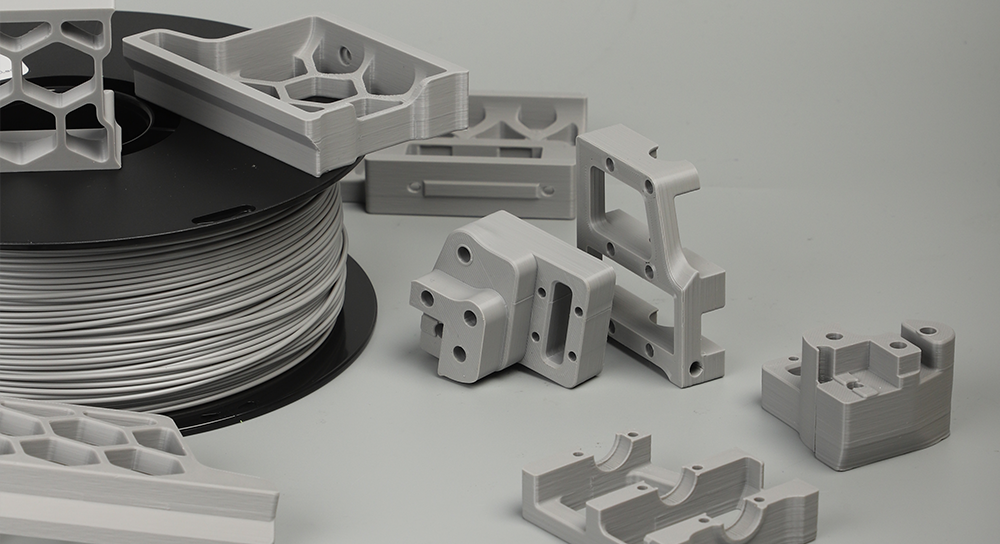
Functional materials are engineered for stronger, more durable components—ideal for brackets, fixtures, enclosures, and mechanically stressed parts. These filaments offer improved heat resistance, chemical tolerance, and structural performance over consumer-grade materials.
- K5 ABS: Tough, heat-resistant material for enclosures and functional prototypes.
- K6 ABS FR: Flame-retardant ABS meeting UL94 safety standards for electrical housings.
- K6 HIPS: Support or standalone material with clean breakaway and easy post-processing.
- K6 UCM 300: Cleaning filament for maintaining nozzles and switching between high-temp materials.
Engineering Filaments
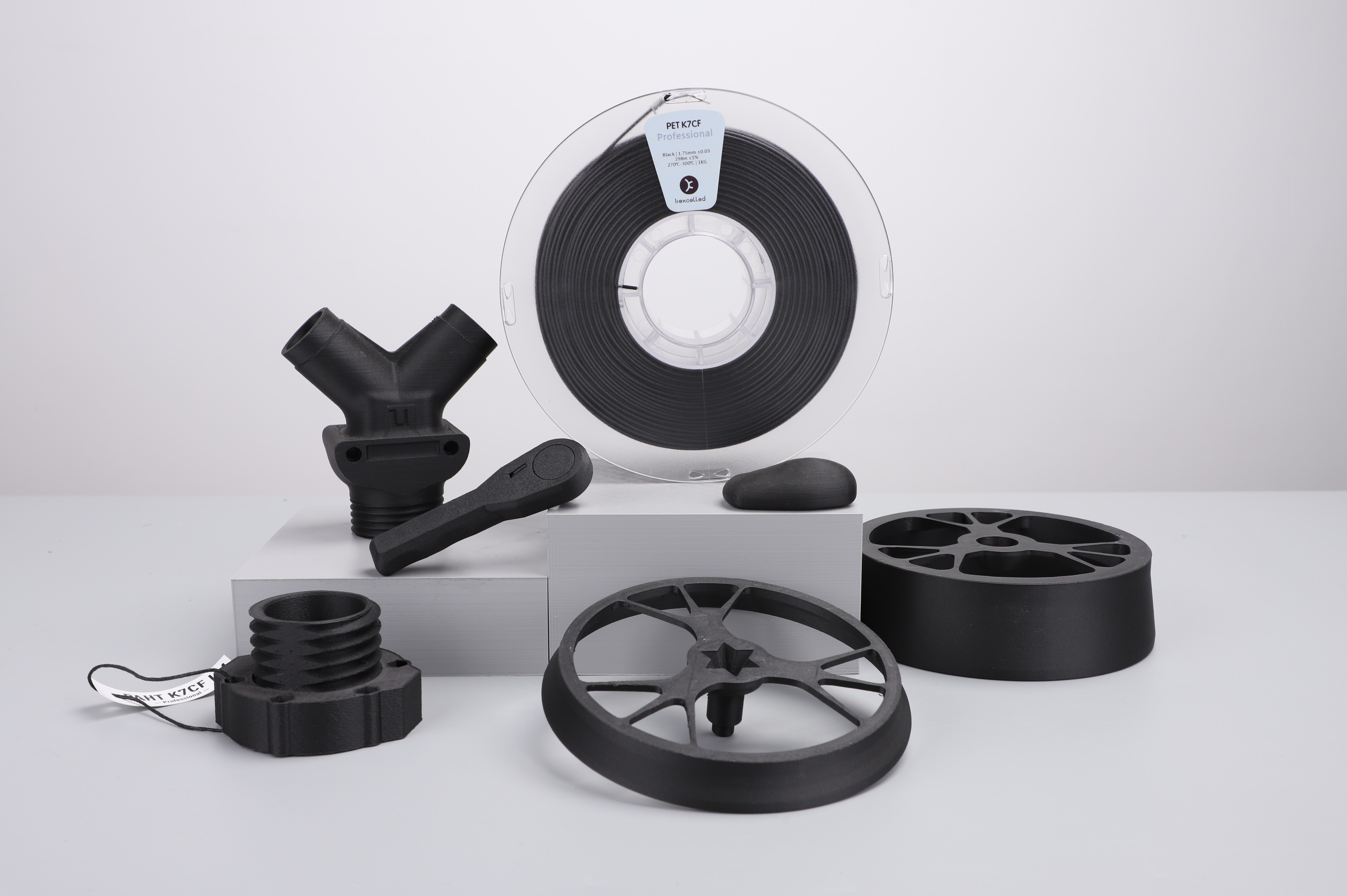
Engineering materials are designed for load-bearing, industrial, and end-use components. With enhanced stiffness, heat tolerance, and chemical resistance, these filaments are suitable for demanding mechanical applications.
- K7 PET CF10: Carbon-fibre PET for rigid, lightweight structural parts.
- K8 PC: High-strength polycarbonate for enclosures and impact-resistant parts.
- K8 PA CF: Carbon-fibre nylon with excellent mechanical and thermal properties.
- K9 PPA CF15: Premium polyamide composite for industrial-grade performance.
Special Engineering Filaments
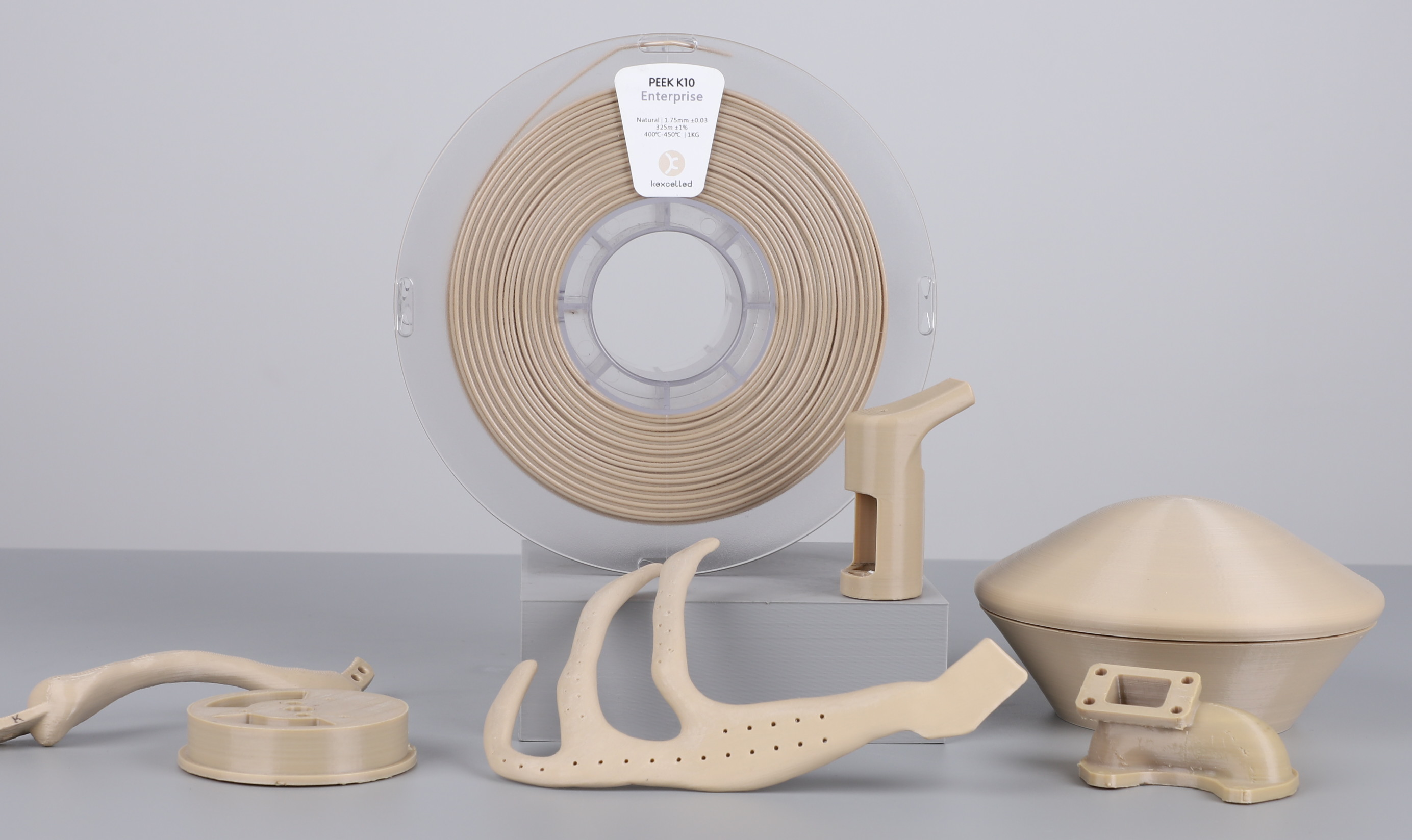
Special Engineering filaments represent the highest tier of polymer performance. These advanced materials are suited for aerospace, automotive, medical, and industrial environments where extreme heat, chemical resistance, and mechanical strength are essential.
- K11 PEEK: Exceptional thermal and chemical resistance for aerospace-grade components.
- K11 PEEK CF10 / GF10: Reinforced PEEK variants offering extreme rigidity and dimensional stability.
- K11 PEI 1010 / K12 PEI 9085: High-temperature polymers used in tooling, transport, and end-use applications.
- K11 PEKK: Amorphous high-performance polymer with outstanding layer adhesion.
- K11 PPSU: Steam-sterilisable, chemically resistant polymer for medical and industrial uses.
FDM Printing — At a Glance
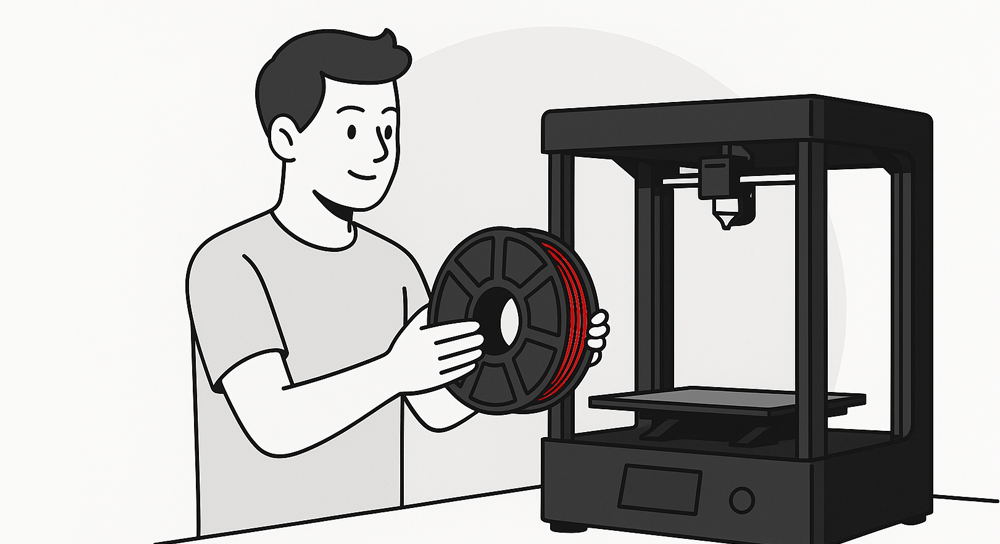
Load Filament
Purge until the colour runs clean and matches your material. Confirm nozzle temp is within range (PLA: 190–220 °C, ABS: 230–250 °C). Cut the end at a 45° angle for smoother feeding.
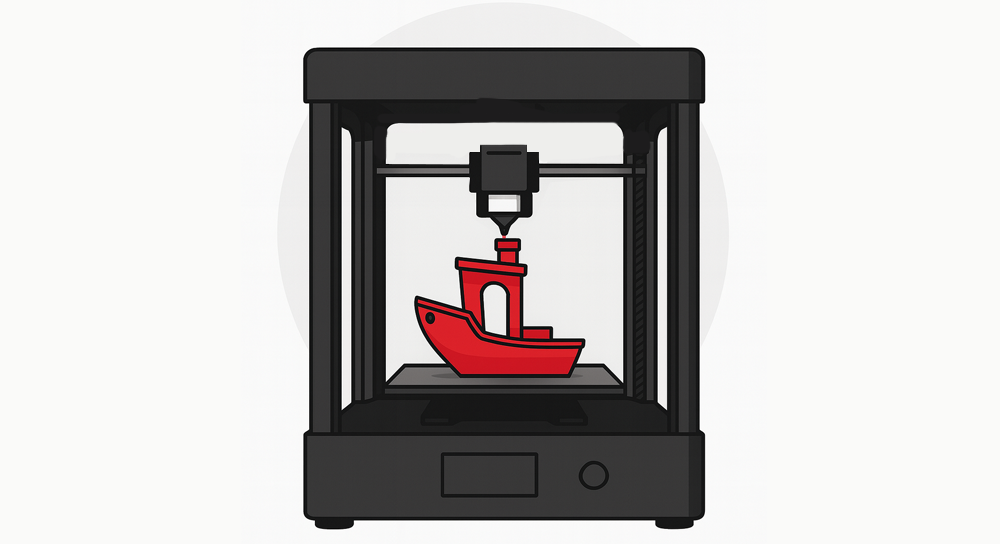
Use a 0.2 mm first layer with slower speed (20–40 mm/s) for best adhesion. Apply glue stick, PEI, or tape depending on the filament. Set cooling: full fan for PLA, low or off for ABS/TPU.
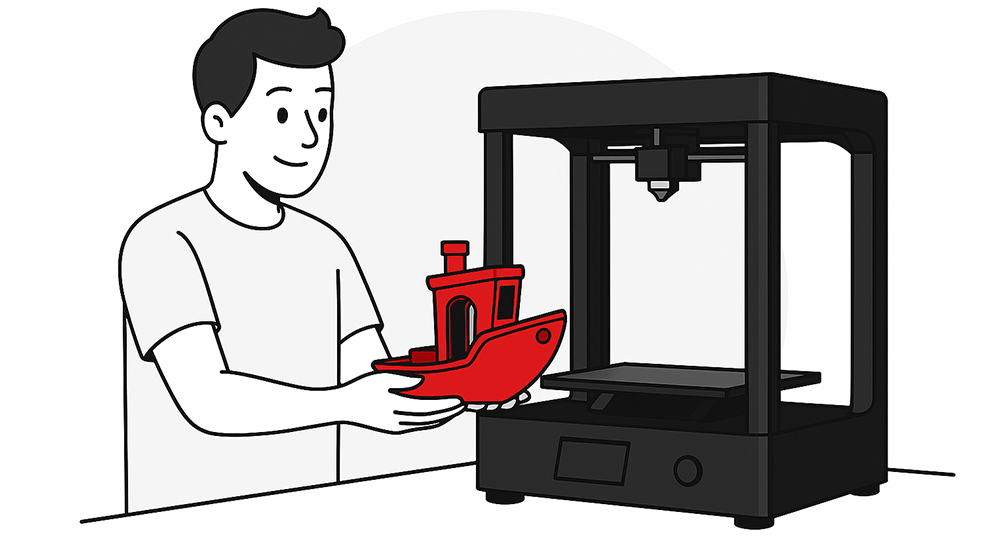
Remove & Finish
Let the bed cool to ~30–40 °C so parts release naturally. Use a scraper or flex plate if needed. Trim supports or brims, and store prints away from heat and moisture.
MOLEGRID™ Resins
Standard LCD Resin
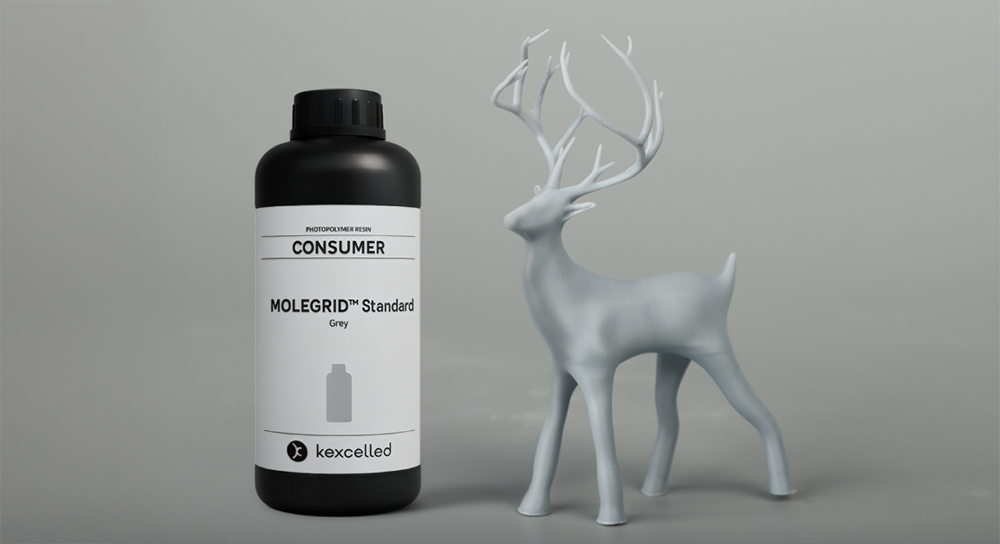
Balanced general-purpose resin for models, miniatures, and visual prototypes. Prints with sharp detail and predictable support removal.
- Wavelength: 405 nm (MSLA/LCD)
- Layer Range: 0.025–0.05 mm typical
- Wash: 90–99% IPA or approved cleaner, 2–5 min
- Post-cure: 5–15 min @ 405 nm (thin walls cure faster)
- Notes: Ventilate; shake bottle well before use
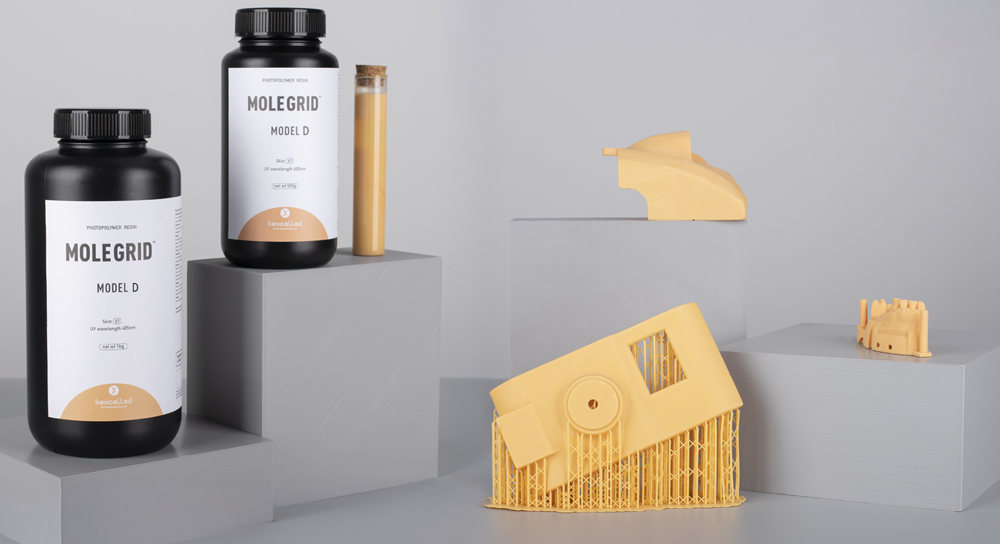
Dental Model Resin
Dimensionally stable, low-shrink resin designed for dental models and aligner workflows. Opaque matte finish to highlight margins and detail.
- Wavelength: 405 nm
- Accuracy: High rigidity & low creep for clean margins
- Wash: 2–3 min (gentle agitation), thorough dry
- Post-cure: 10–20 min (per printer/power)
- Notes: Not for intraoral/medical use unless specifically certified
Tough LCD Resin
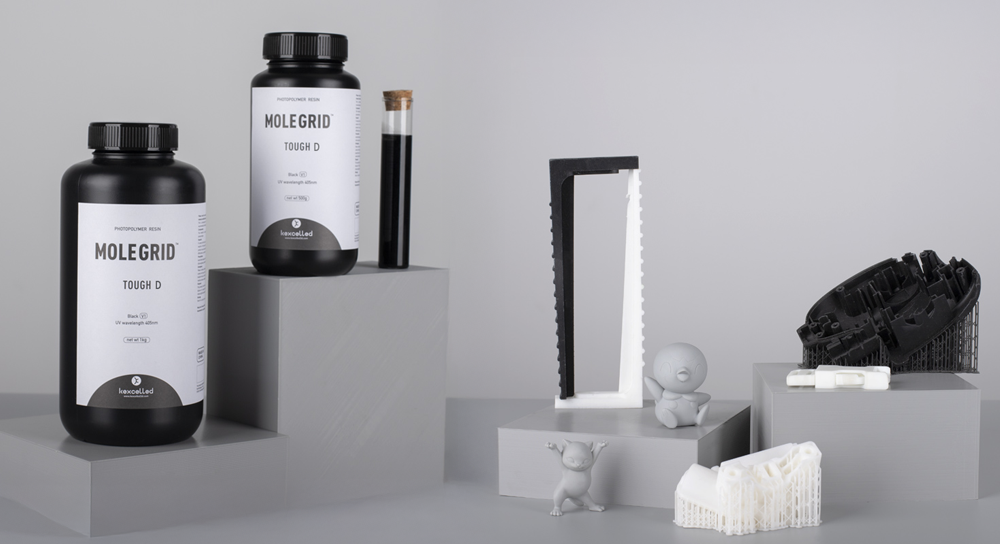
Impact-resistant resin for functional prototypes, clips, and snap-fits. More ductile than standard resins, with improved drop resistance.
- Wavelength: 405 nm
- Layer Range: 0.05–0.1 mm typical
- Wash: 2–5 min; avoid over-washing to preserve toughness
- Post-cure: 10–20 min; consider warm cure for best strength
- Notes: Increase exposure slightly for thicker parts
LCD Resin Printing — At a Glance
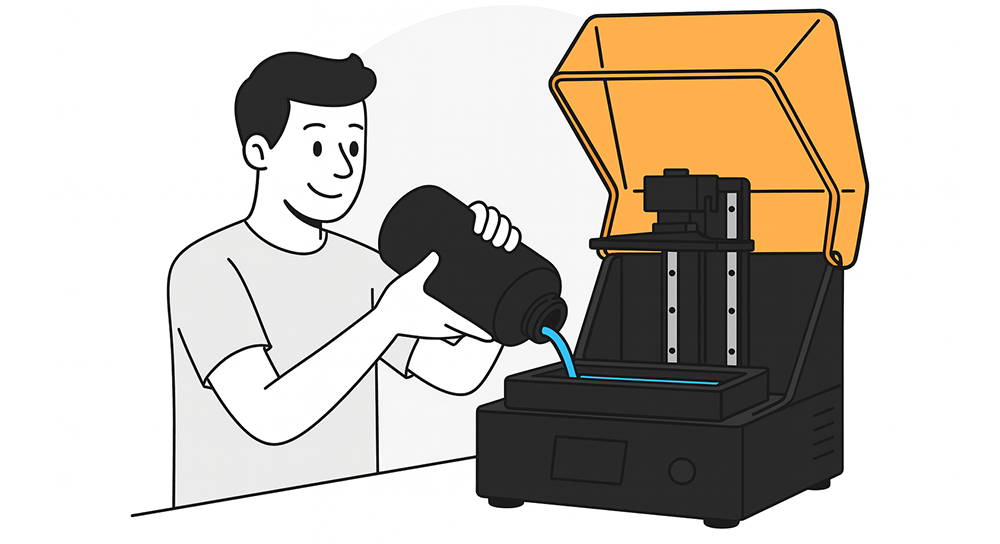
Fill the Vat
Shake resin thoroughly before use, then fill the vat to the line. Level the build plate to ensure consistent adhesion and accuracy across layers.
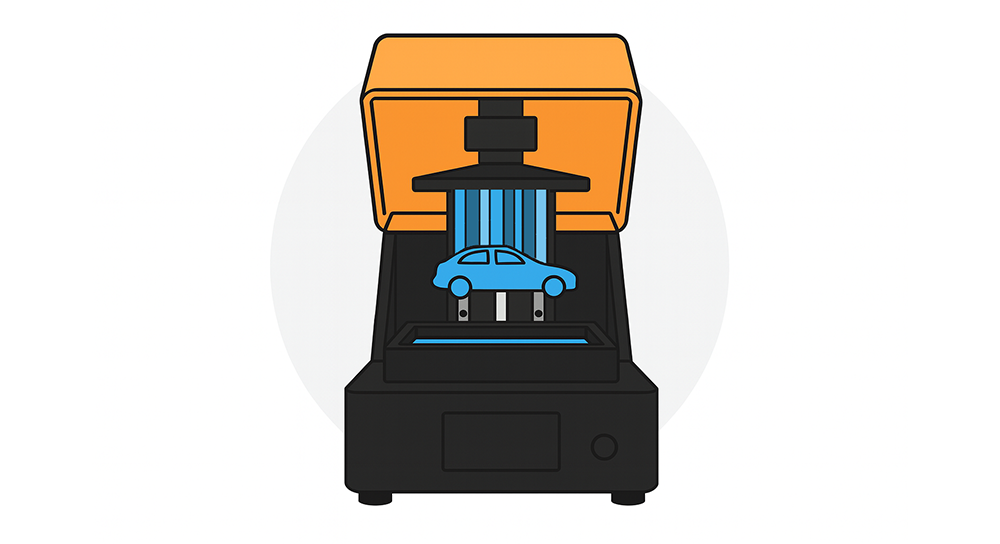
Expose Layers
Select a validated profile for your printer and resin type. Match exposure times to layer height (e.g., 0.025–0.05 mm) for detail, strength, and smooth surfaces.
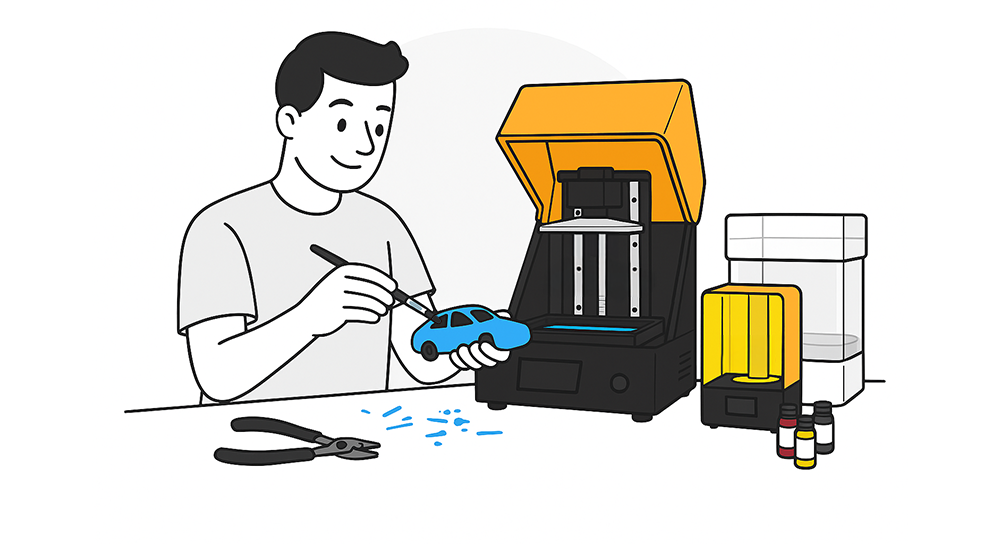
Remove & Post-Cure
Wash parts in IPA or resin cleaner, then dry fully. Cure under 405 nm UV light for 5–15 minutes to achieve final strength and dimensional stability.
