Blogs
-
Posted: August 17, 2026Read more »
FibreSeeker 3 Brings Continuous Fibre 3D Printing to the Desktop
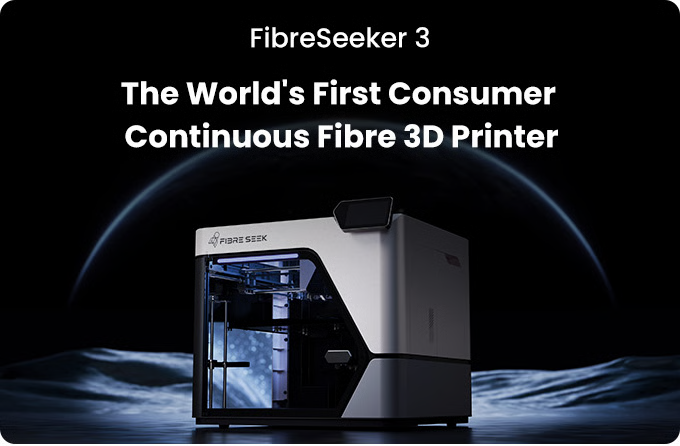
Desktop 3D printers have become faster, more accurate and considerably easier to use, but the strength of conventional FDM parts can still limit their practical applications. While standard thermoplastics work well for models, prototypes and many everyday components, they may not provide the stiffness or load-bearing performance required for demanding functional parts.
The FibreSeeker 3 has been developed to address this limitation by bringing continuous fibre reinforcement to a more accessible desktop system. Created by FibreSeek, the printer combines conventional polymer extrusion with continuous carbon or glass fibre, allowing reinforcement to be placed within selected areas of a printed component.
Posted: May 28, 2026Read more »Why Educational Robotics Matters in 2026: Preparing Students for AI, Automation and Industry 4.0
Educational robotics is becoming increasingly important as artificial intelligence, automation and smart manufacturing continue to shape the future of industry. Schools, colleges and universities are no longer just teaching students how to use technology — they are beginning to teach students how technology works, how it moves, how it senses information, and how automated systems make decisions in the real world.
Robot arms provide a practical and engaging way to introduce these concepts. Instead of writing code that only appears on a screen, students can programme a robotic arm to move, grip objects, follow instructions, repeat tasks, or simulate parts of a production line. This creates a much stronger connection between software, engineering and real-world problem-solving.
In 2026, educational robotics is becoming more valuable not only for e
Posted: May 14, 2026Read more »Kexcelled MOLEGRID Dental Resins: Practical Materials for Digital Dentistry Workflows
Kexcelled MOLEGRID dental resins are designed for professional dental 3D printing applications, covering a wide range of laboratory and clinical workflows including dental models, orthodontic models, gingiva masks, surgical guides, denture bases, impression trays, try-in parts, casting patterns, and temporary crown and bridge work.
For dental laboratories, clinics, and production environments, resin choice has a direct impact on print accuracy, handling, post-processing, workflow reliability, and the final use of the printed part. A general-purpose resin may be fine for basic prototypes, but dental applications often require materials with specific mechanical behaviour, surface finish, flexibility, transparency, burnout performance, or biocompatibility depending on the intended use.
The MOLEGRID dental range helps separate these workflows into application-specific materials,
Posted: March 17, 2026Read more »PC FR Filament for Engineering Parts: Strength with Fire Safety
If you’re looking at PC FR filament, you’re probably not trying to print decorative parts. You’re usually looking for something more serious: a material that keeps the core strengths of polycarbonate, but adds improved fire safety for parts used around electronics, enclosures, protective housings, and other engineering applications where heat and risk management matter. That is the point of flame-retardant polycarbonate. Kexcelled’s K9 PC FR is positioned exactly there, combining polycarbonate strength with a UL94 V-0 flame-retardant rating and a high-speed print profile aimed at functional engineering parts.
What Makes PC FR Different?
Standard polycarbonate is already valued in 3D printing for toughness, strength, and better heat resistance than everyday materials like PLA or PETG. The difference with PC FR is that it is formulated to slow burning and self-extinguish more effectively when ex
Posted: March 09, 2026Read more »OBC 3D Filament Explained: What Olefin Block Copolymer Is, Why It’s Used, and Where It Fits
If you’re looking into OBC filament, you’re probably not hunting for a pretty shelf model material. You’re looking for something more functional: lightweight, durable, chemically resistant, and able to handle repeated flex without turning into a floppy rubber part. That is the space OBC sits in. OBC stands for olefin block copolymer, and modern OBC materials are built around a distinct block architecture designed to deliver a useful balance of recovery, flexibility and processability. In 3D printing terms, materials such as Kexcelled K8 OBC are positioned around low water absorption, flexibility, chemical resistance and low density.
What Makes OBC Different?
What makes OBC interesting is that it does not behave like a typical rigid filament, but it also does not need to behave like a very
Posted: March 02, 2026Read more »K8™ PC Polycarbonate Filament Guide: Engineering-Grade Performance for Desktop 3D Printing
What Is Polycarbonate (PC) Filament?
Polycarbonate, commonly referred to as PC, is a high-performance engineering thermoplastic known for its strength, toughness, and heat resistance. It sits well above standard materials like PLA and PETG in terms of mechanical durability and temperature capability.
However, traditional polycarbonate can be challenging to print. Warping, poor layer bonding, and environmental sensitivity often make it unsuitable for many desktop systems. That’s where modern engineered PC blends like Kexcelled’s K8™ PC come in.
Why Step Up to PC?
If PLA is for rapid prototyping and PETG or ABS cover light functional use, polycarbonate is where you step into serious mechanical performance. PC offers significantly higher impact resistance, improved thermal stability, and stronger structural integrity.
With a recom
Posted: February 23, 2026Read more »PEEK 3D Filament Explained: What It Is, Why It’s Used, and Which Kexcelled PEEK Grade to Pick
What Is PEEK?
If you’ve been looking into high-performance 3D printing materials, you’ve probably seen PEEK come up a lot. It gets talked about as one of the “serious” engineering filaments, and that’s because it is.
PEEK (Polyether Ether Ketone) is a semi-crystalline, high-performance thermoplastic that’s built for jobs where normal materials just aren’t enough. It’s known for handling high temperatures, chemical exposure, and mechanical stress far better than common filaments like PLA, PETG, or ABS. Victrex, one of the best-known names in PEEK materials, describes it as one of the highest-performing thermoplastics available, which is pretty much why it’s become such a big deal in industrial manufacturing and additive manufacturing.
Why PEEK Is So Effective in Engineering Applications
What makes PEEK so useful is the combination
Posted: February 09, 2026Read more »Carbon Fibre Filament for 3D Printing: when it is worth it, what to print, and how to get clean results
If you have ever printed a part that felt “nearly there” but not quite rigid enough, carbon fibre reinforced filament is usually the next step people Google. Not because it magically turns your desktop printer into an aerospace machine, but because it solves a very specific set of problems really well: stiffness, dimensional stability, and lightweight strength for real world functional parts.
We have been selling a fair bit of carbon fibre filament lately, so I wanted to put together a proper guide that answers the stuff people actually ask when they are researching CF filament. What is it good for, when is it a waste of money, which base polymer should you choose, and what do you need to change in your print settings so it does not come out like a brittle twig.
And yes, we are talking specifically around chopped carbon fibre filled FFF or FDM filaments (PL
Posted: January 08, 2026Read more »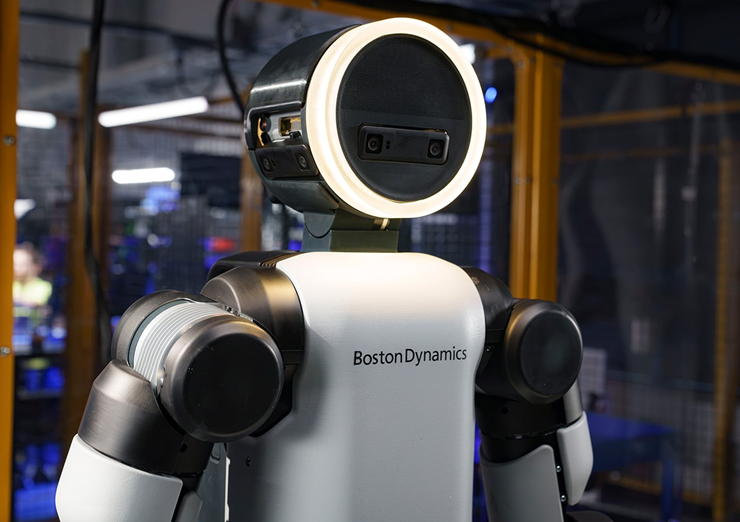
Atlas and the Next Leap Forward in Humanoid Robotics
Every now and then, a piece of technology comes along that genuinely makes you stop and think, “Right… this changes things.” Boston Dynamics’ latest version of Atlas feels like one of those moments. Not because it can do backflips or run faster than before, but because it finally looks like a robot that belongs in the real world.
Atlas has always been impressive, but this new fully electric version feels different. It’s cleaner, quieter, more efficient, and most importantly, clearly designed with real applications in mind. This is no longer just a research robot built to show what’s possible. It’s a serious step toward humanoid robots working alongside humans in industrial environments.
Why Atlas Feels Different This Time
The biggest shift with the latest Atlas is intent. Boston Dynamics hasn’t just refined movement or balance; they’ve rethought how a humanoid robot should actually f
Posted: December 22, 2025Read more »Anycubic’s Dual Resin 3D Printer: A Big Step Forward for Resin Printing

Resin 3D printing has come a long way over the last few years, with faster print speeds, higher resolutions, and more reliable machines becoming the norm. One of the most interesting recent developments is the introduction of dual-resin printing, led by Anycubic with the launch of the Photon P1.
This new approach allows two different resins to be used in a single print, opening the door to more complex parts, mixed material properties, and new professional workflows that were previously difficult or impossible with standard resin printers.
What Is Dual Resin 3D Printing?
Traditional resin printers use a single vat filled with one type of resin. If you want to change material or colour, the print must stop, the vat must be cleaned, and the resin swapped manually.
Dual r
Recent Posts