

WLKATA Robotics Education and Smart Manufacturing Training
WLKATA designs compact robotics and automation systems for education, technical training, STEM learning, and smart manufacturing demonstrations. The range includes desktop robotic arms, AI vision systems, production-line training cells, and classroom-ready automation kits for teaching robot programming, motion control, machine vision, pick-and-place tasks, and Industry 4.0 workflows.
WLKATA Mirobot Advanced Kit
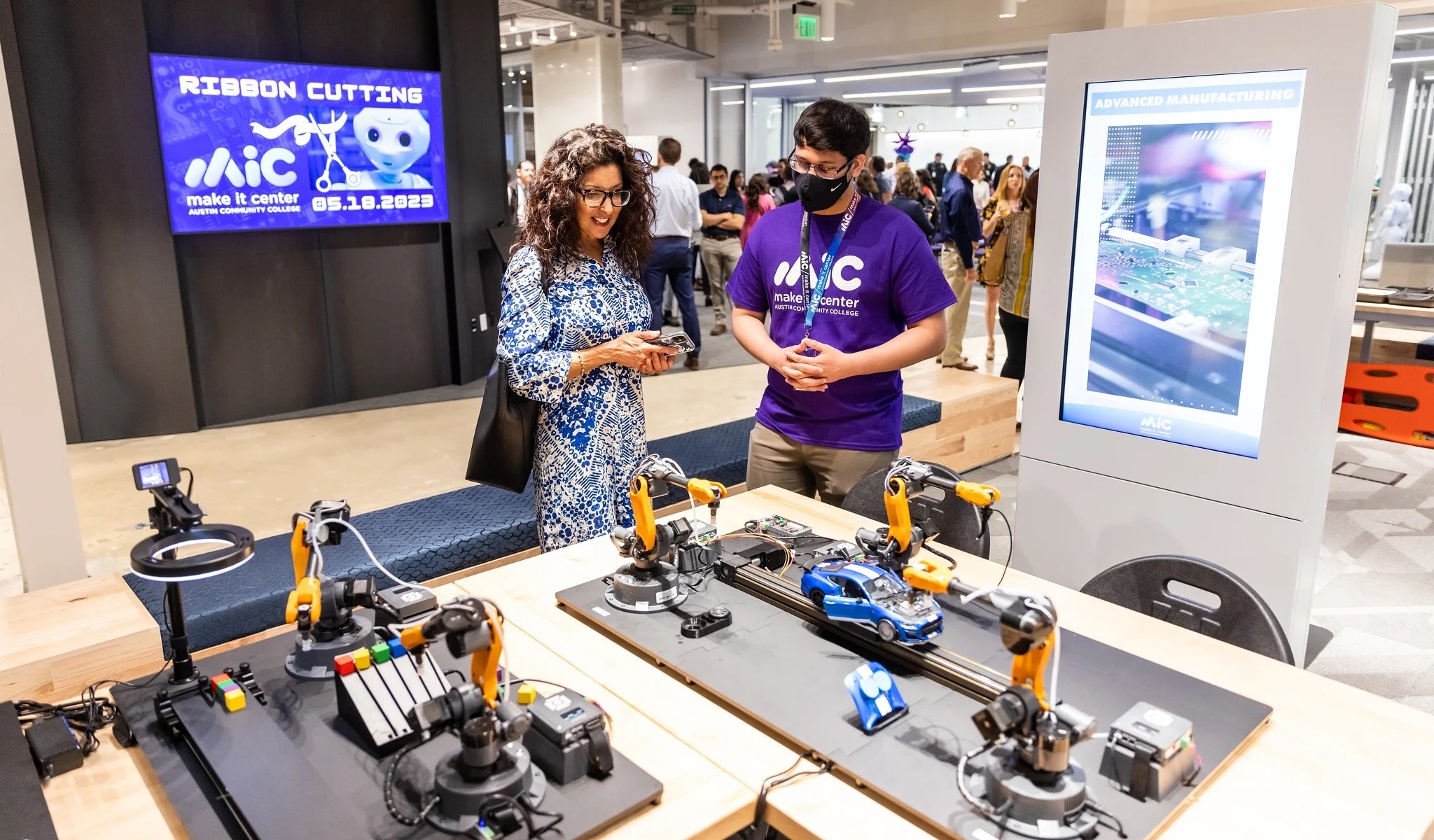
The WLKATA Mirobot Advanced Kit is a compact desktop robotic arm package for learning robotics, coding, pick-and-place movement, sensors, and automation control. It is well suited to schools, universities, STEM labs, and training environments that need a practical entry point into robotic arm programming.
Designed as a miniature industrial robot system, the Mirobot helps learners understand how robotic arms move, respond to commands, and interact with accessories in real automation tasks.
- 6-axis desktop robotic arm for practical robotics training
- Supports coding, movement control, sensors, and automation exercises
- Suitable for STEM, engineering, classroom, and robotics lab use
WLKATA MT4 Edu Kit & Advanced Kit
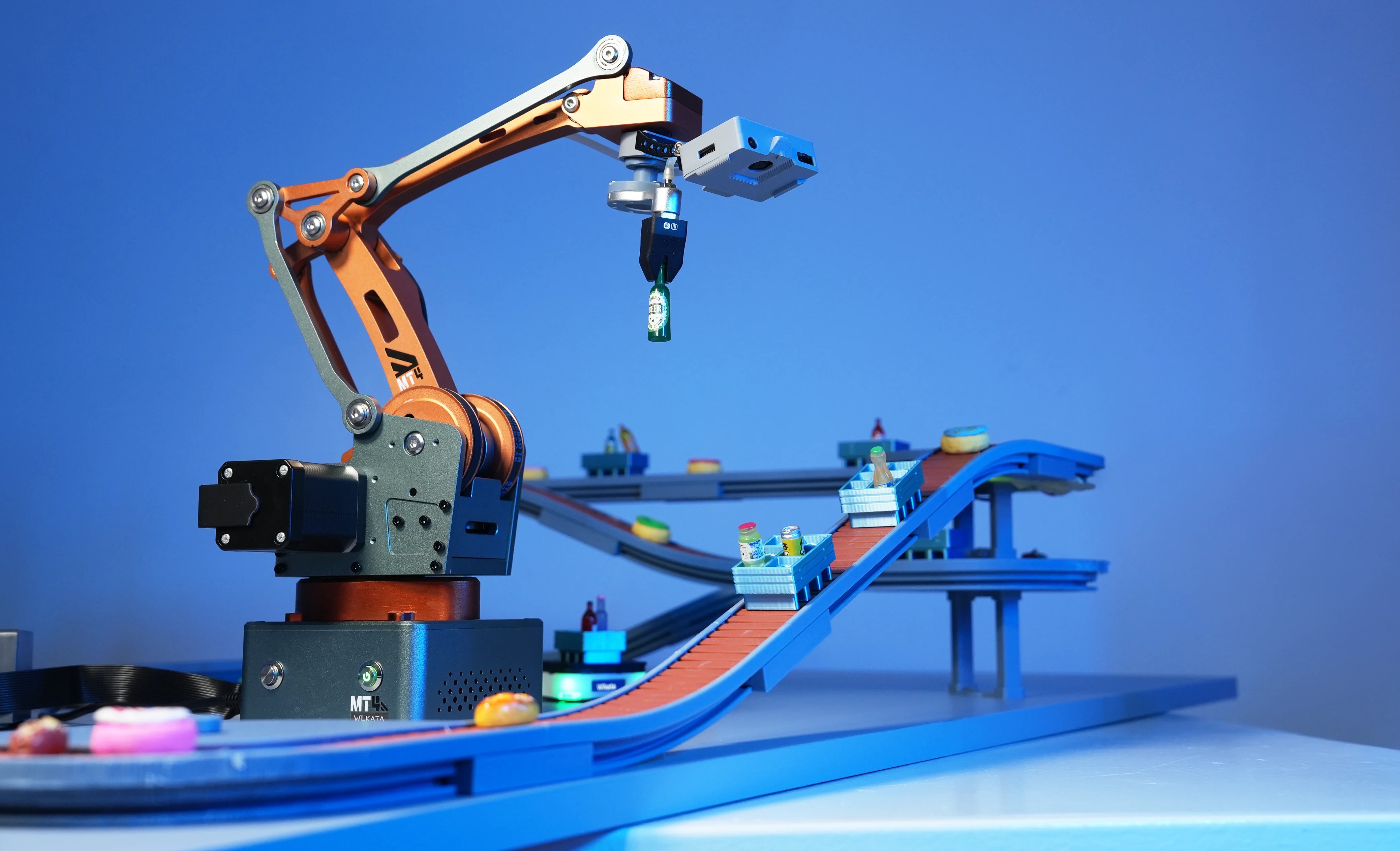
The WLKATA MT4 is a compact metal robotic arm platform available as both an Edu Kit and an Advanced Kit. Both versions are designed for robotics education, technical training, desktop automation practice, and smart manufacturing demonstrations.
The Edu Kit provides a strong foundation for classroom robotics training, while the Advanced Kit adds extra accessories and control options for broader experiments, demonstrations, and lab-based automation projects.
- Metal 4-axis robotic arm platform for stable desktop training
- Edu and Advanced kit options available from the same product page
- Designed for pick-and-place, sorting, calibration, and motion control practice
AI Vision and Smart Manufacturing Training Systems
WLKATA smart manufacturing systems help learners move beyond individual robot arm control and into connected automation workflows. These products are useful for teaching how robotic arms, conveyors, cameras, touchscreen controls, and programming logic work together in practical production-style environments.
WLKATA Mirobot AI Automatic Sorting Cell
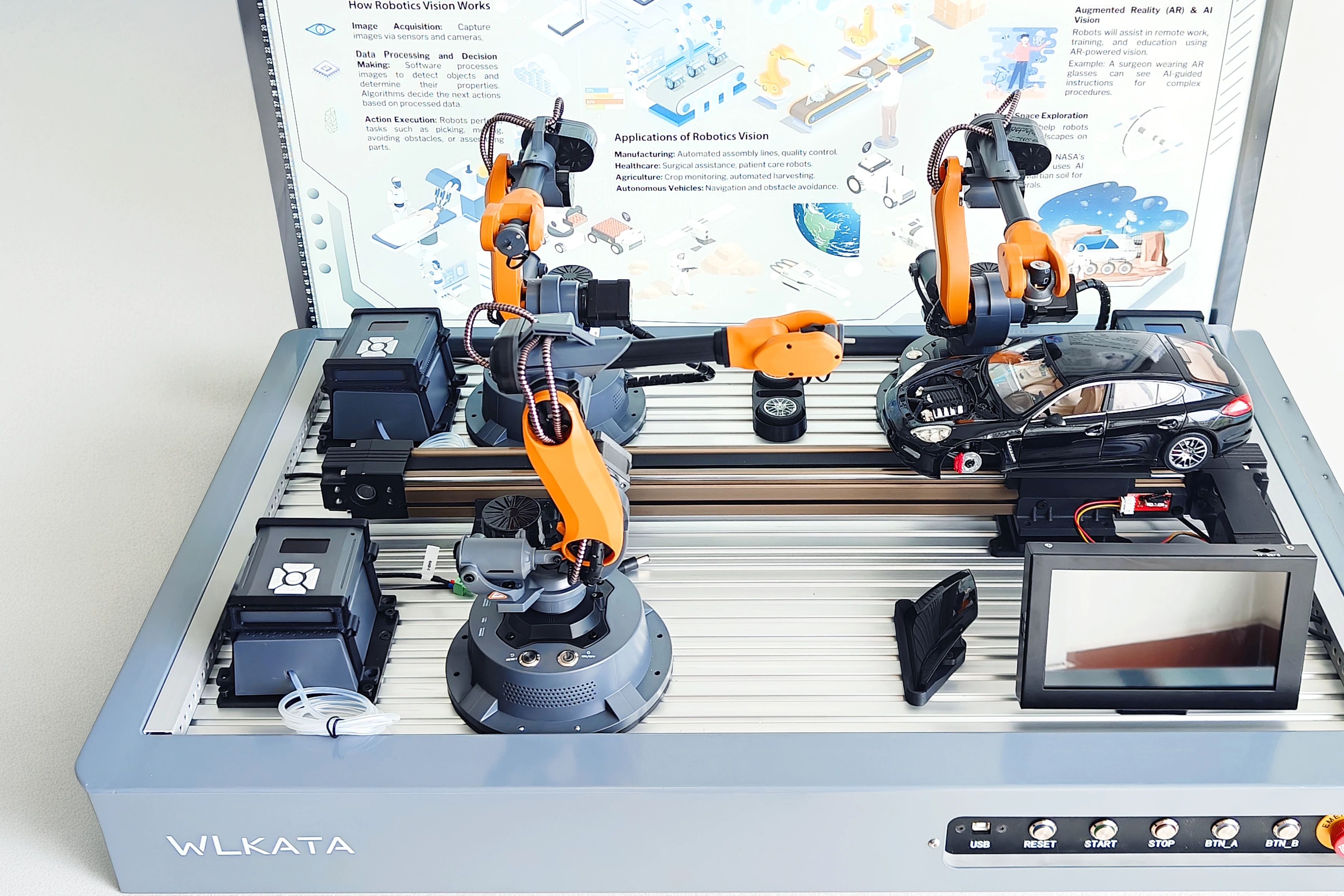
The WLKATA Mirobot AI Automatic Sorting Cell is a desktop smart manufacturing training system for teaching AI vision, conveyor automation, robotic coordination, and automatic sorting workflows. It gives learners a practical way to see how robots, cameras, and conveyors work together inside a compact production cell.
It is well suited to STEM labs, engineering departments, technical colleges, and robotics training centres that need a complete workcell for demonstrating automation, colour recognition, picking, placing, and production-line logic.
- Desktop AI vision sorting cell for smart manufacturing training
- Combines robotic arms, conveyor movement, and camera recognition
- Useful for AI robotics, automation, and Industry 4.0 education
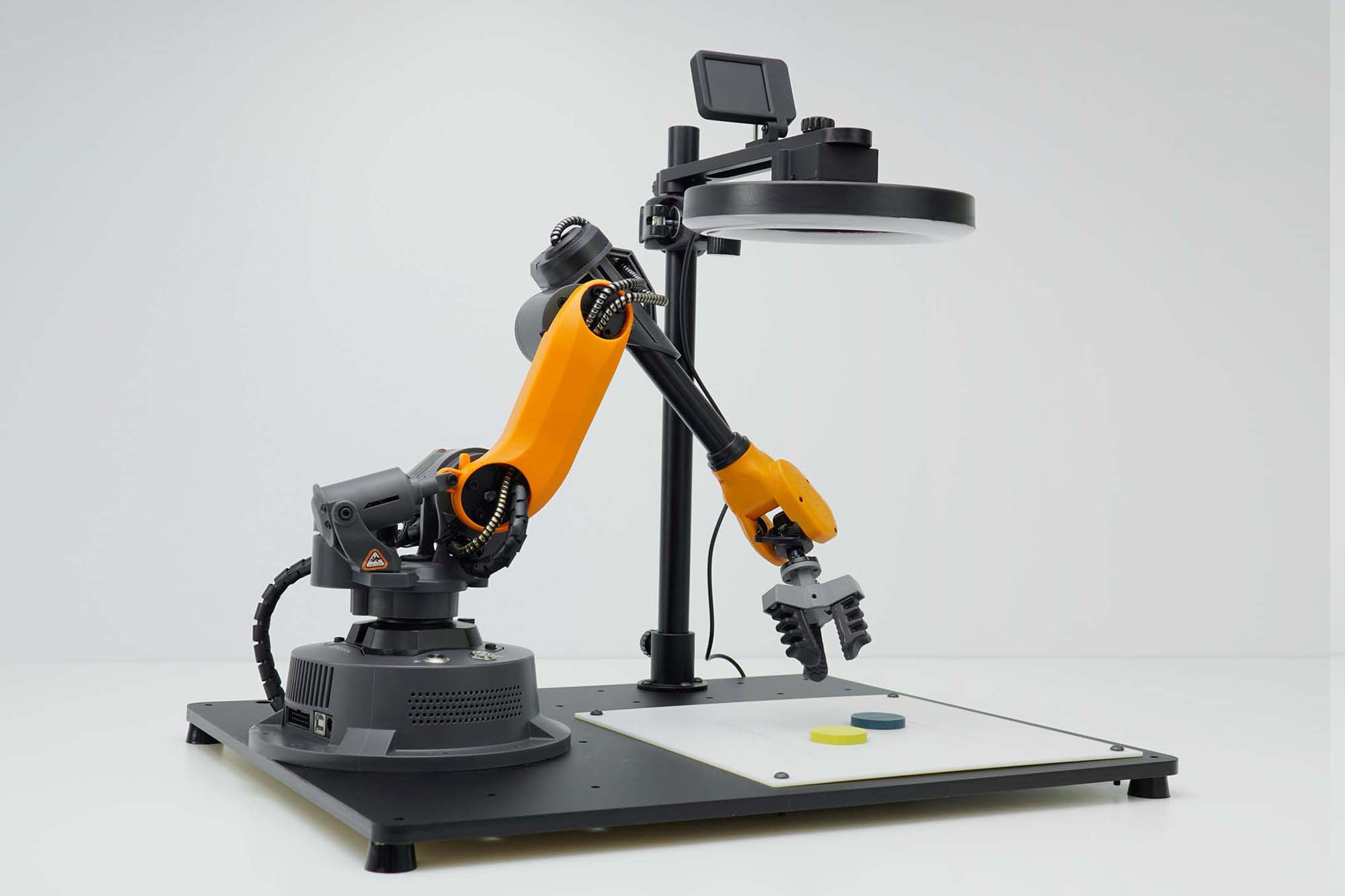
WLKATA AI Vision Set for Mirobot & MT4
The WLKATA AI Vision Set is an OpenMV-based machine vision add-on for compatible WLKATA robotic arms, including Mirobot and MT4. It helps learners explore colour recognition, object handling, calibration, image processing, QR code recognition, and camera-guided robotic experiments.
This set is useful for education providers that already use WLKATA robotic arms and want to expand into AI vision, machine vision, and smart automation lessons without moving to a full production-cell system.
- OpenMV-based AI vision add-on for WLKATA robotic arms
- Compatible with Mirobot, MT4, Haro380, and MiroMax systems
- Supports colour recognition, calibration, and camera-guided automation
WLKATA robotics systems give schools, universities, training centres, and engineering departments a practical way to teach automation using real movement, physical programming tasks, AI vision, and compact smart manufacturing examples. The current range supports beginner robotics lessons through to more advanced training in machine vision, sorting cells, and production-line automation workflows.
