Anycubic’s Dual Resin 3D Printer: A Big Step Forward for Resin Printing
Anycubic’s Dual Resin 3D Printer: A Big Step Forward for Resin Printing
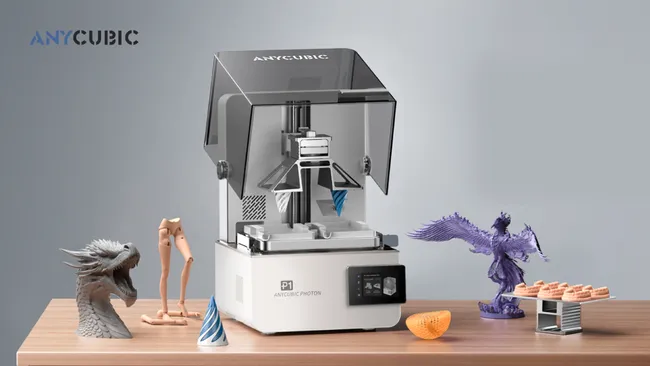
Resin 3D printing has come a long way over the last few years, with faster print speeds, higher resolutions, and more reliable machines becoming the norm. One of the most interesting recent developments is the introduction of dual-resin printing, led by Anycubic with the launch of the Photon P1.
This new approach allows two different resins to be used in a single print, opening the door to more complex parts, mixed material properties, and new professional workflows that were previously difficult or impossible with standard resin printers.
What Is Dual Resin 3D Printing?
Traditional resin printers use a single vat filled with one type of resin. If you want to change material or colour, the print must stop, the vat must be cleaned, and the resin swapped manually.
Dual resin printing changes this by allowing the printer to work with two separate resins during the same print job. This can mean switching between materials at specific layers or combining different properties within one model.
For example, a print could use a rigid resin for structure and a flexible resin for joints, seals, or grips, all without manual intervention.
The Anycubic Photon P1: What Makes It Different
The Anycubic Photon P1 is one of the first consumer-accessible resin printers designed specifically for dual-material printing. Instead of being a simple upgrade, it introduces new hardware and software systems to manage resin switching reliably.
- Two independent resin tanks for different materials or colours
- Automated resin switching during a print
- Temperature-controlled resin handling for better consistency
- Reduced peel forces to improve print success with complex parts
This design makes dual-resin printing practical rather than experimental, which is why it has attracted so much attention.
Why Dual Resin Printing Matters
Dual resin printing is not just about colour changes. The real value comes from combining material properties in a single part.
- Rigid and flexible sections in one print
- Hard shells with soft internal components
- Clear and opaque elements combined
- Functional prototypes closer to final production parts
For engineers, designers, and product developers, this means fewer assembly steps and more realistic prototypes straight off the printer.
Use Cases for Dual Resin Printing
While hobbyists will enjoy the creative possibilities, the Photon P1 is particularly relevant for professional and commercial use.
- Product prototyping with mixed material requirements
- Medical and dental models with soft and hard areas
- Engineering parts with integrated seals or dampening zones
- Miniatures and display models with colour separation
These are applications where traditional single-resin printers often require post-processing or multiple printed parts.
Challenges and Considerations
As with any new technology, dual resin printing comes with a few considerations.
- More complex cleaning and maintenance routines
- Higher material management requirements
- Learning curve for slicing and material planning
However, for users who already rely on resin printing professionally, these trade-offs are often outweighed by the time saved and the improved quality of finished parts.
What This Means for the Future of Resin Printing
The release of the Anycubic Photon P1 signals a shift in resin printing from single-material workflows toward more advanced, production-ready systems. As software support improves and more compatible resins become available, dual-material resin printing is likely to become far more common.
We expect to see further developments in multi-material support, smarter slicing tools, and broader resin compatibility over the next few years.
Final Thoughts
The Anycubic Photon P1 represents one of the most meaningful recent progressions in desktop resin 3D printing. By making dual-resin printing accessible, it bridges the gap between hobbyist machines and professional prototyping tools.
For anyone looking to push resin printing beyond basic single-material models, this technology is well worth watching.